YOUTH OF SCIENCE – 2026: UNITING YOUNG RESEARCHERS IN GLOBAL COMMUNICATIONS AND LINGUISTIC STUDIES
On April 22, 2026, the Department of Foreign Philology hosted sessions for two scientific sections as part of the annual International Scientific and Practical Conference for students, postgraduates, and young scientists, “Youth of Science-2026.” The event provided a platform for productive dialogue between experienced faculty and young researchers, combining scientific inquiry in the fields of intercultural communication, innovation, and modern linguistics.
Section 8. Global World: Innovation, Communication, Culture
This section brought together a wide range of participants, including faculty members from the Department of Foreign Philology, undergraduate students (years 1–4), master’s students, and postgraduates. The section demonstrated a multidisciplinary approach, as the presentations covered significant research in the following areas:
-
Information technology;
-
Construction and architecture;
-
Design and marketing;
-
Sociology and philosophy;
-
Engineering and tourism.
A total of 23 people took part in the session, with 12 participants presenting their research findings. The atmosphere was friendly yet professional, encouraging an active exchange of ideas for future scientific projects.
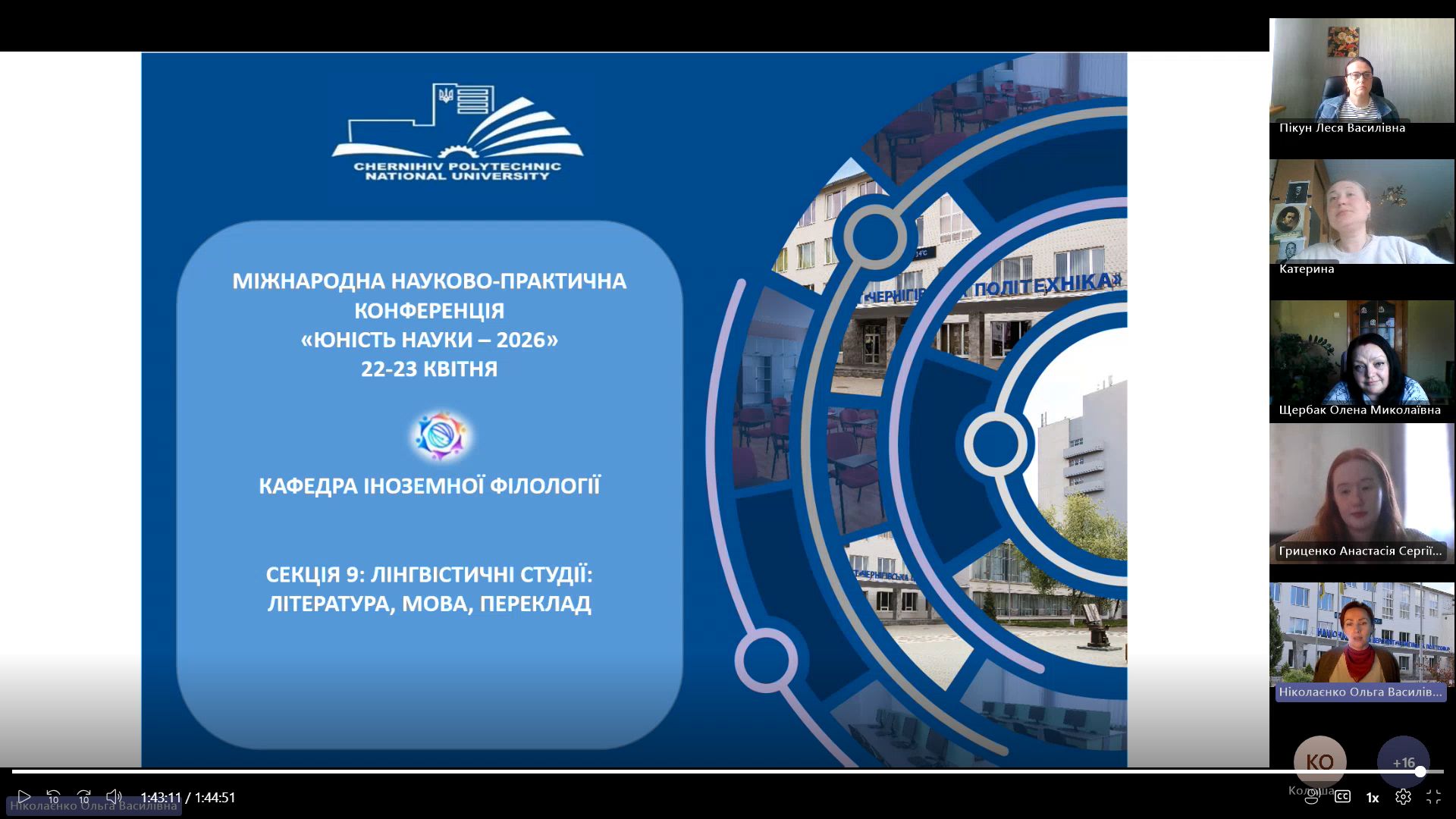
Section 9. Linguistic Studies: Literature, Language, Translation
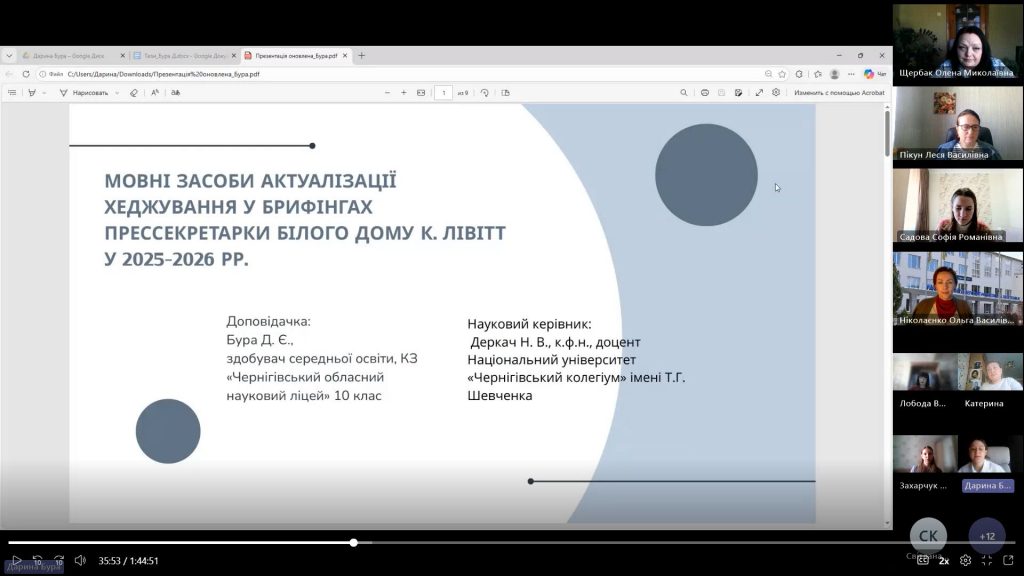
the work of the ninth section was characterized by its broad geographic reach and a sense of continuity between generations. In addition to Philology students from Chernihiv Polytechnic National University, the discussion included fourth-year students from T.H. Shevchenko National University “Chernihiv Colehium” and a 10th-grade student from the Chernihiv Regional Scientific Lyceum. This format not only strengthens cooperation between institutions but also creates a strong career-orientation path for school students.
The presentations addressed vital issues in linguistics and literary studies. Specifically, researchers examined:
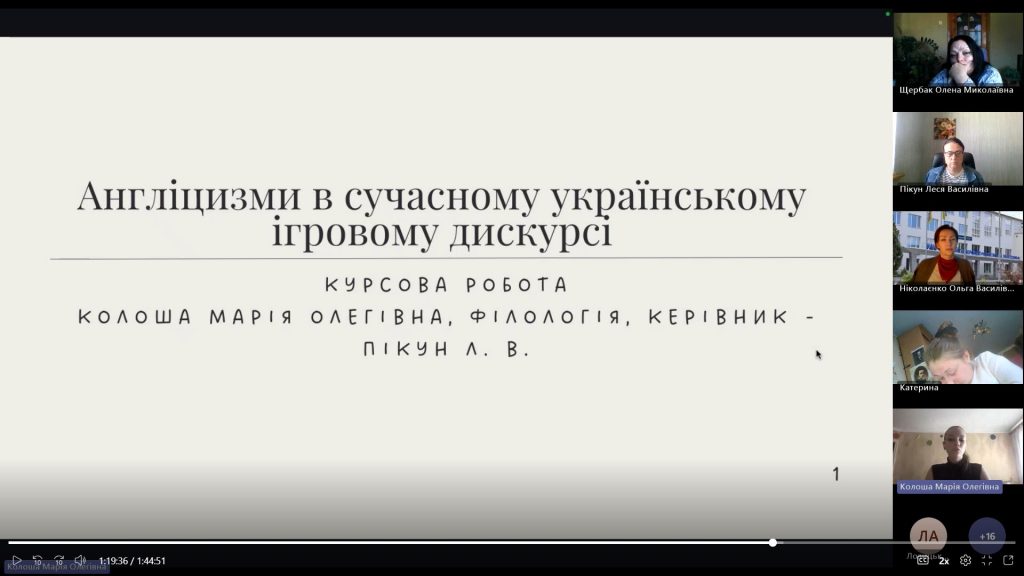
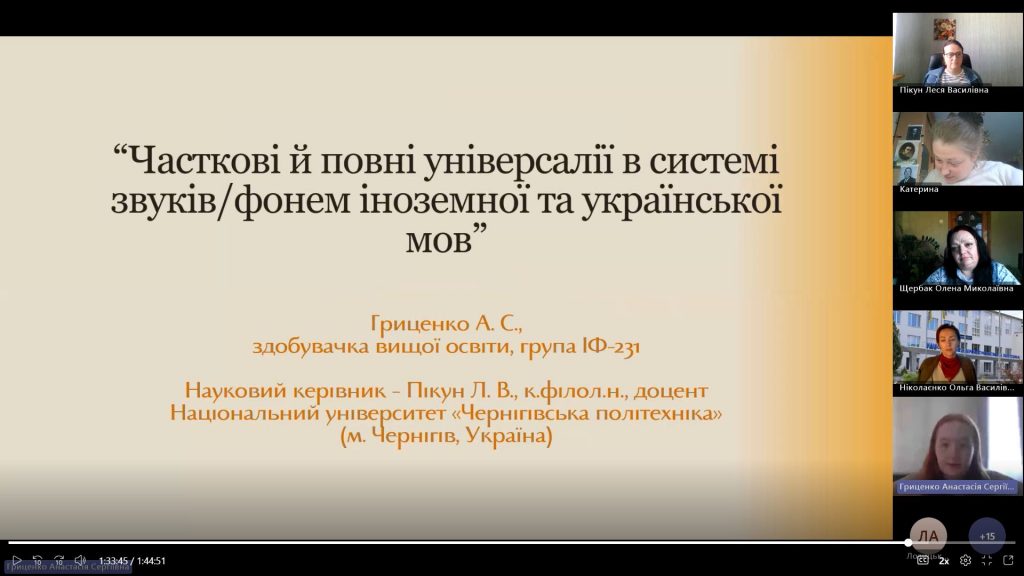
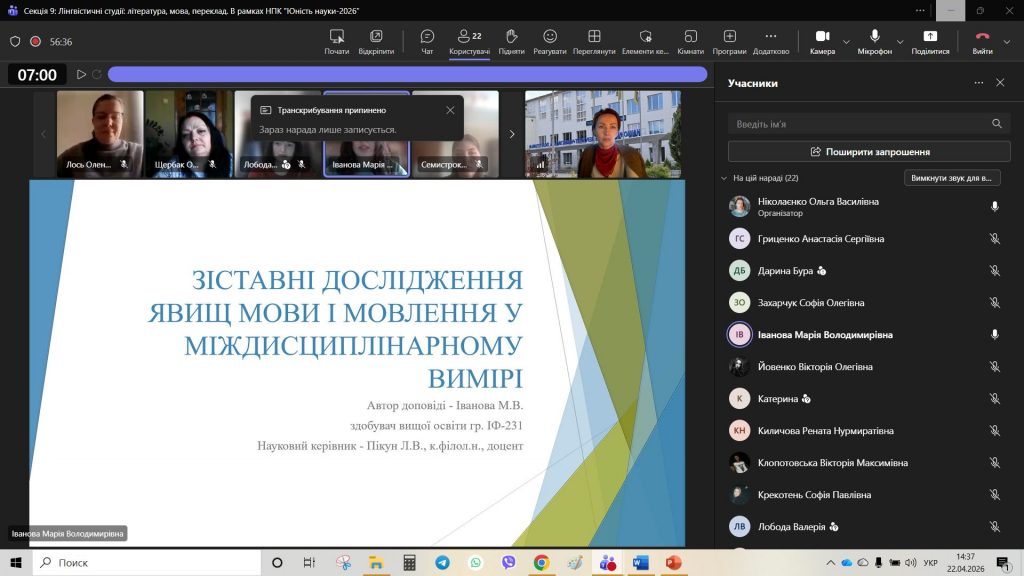
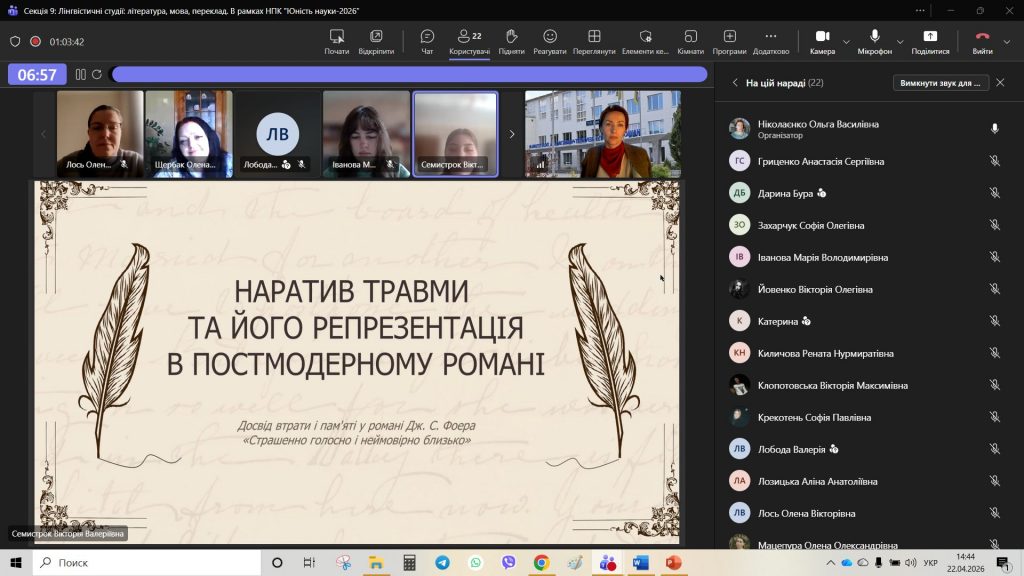
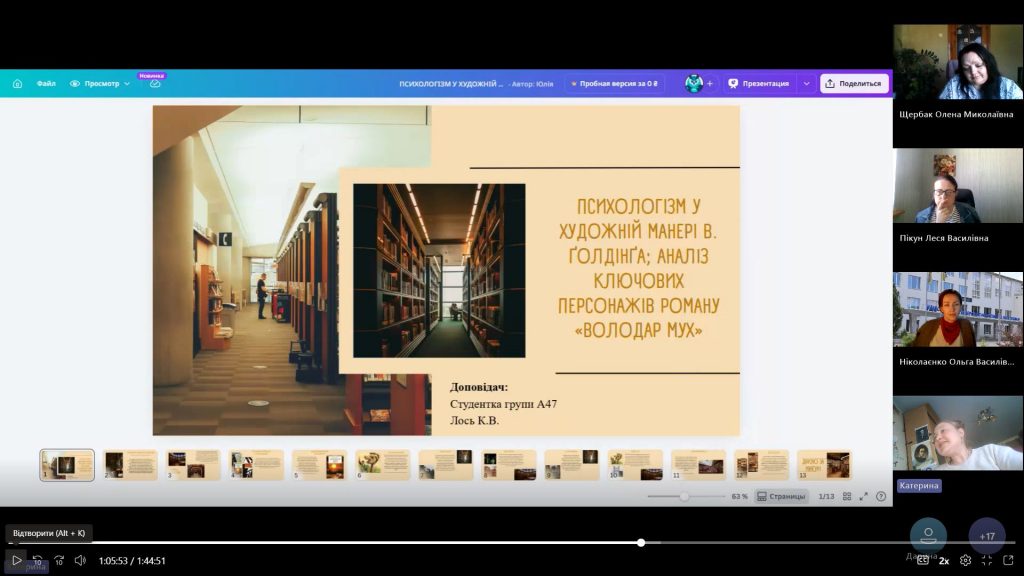
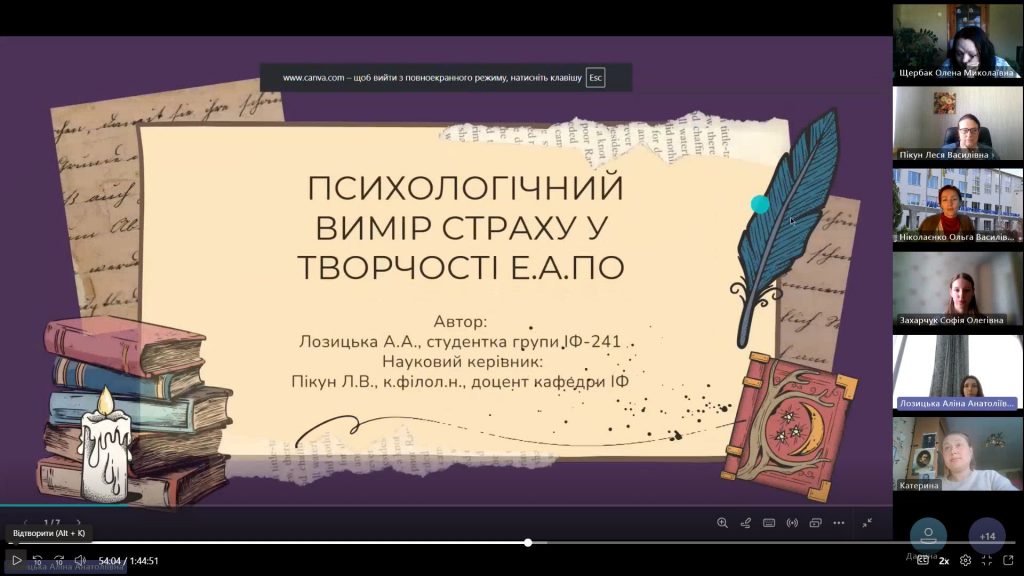
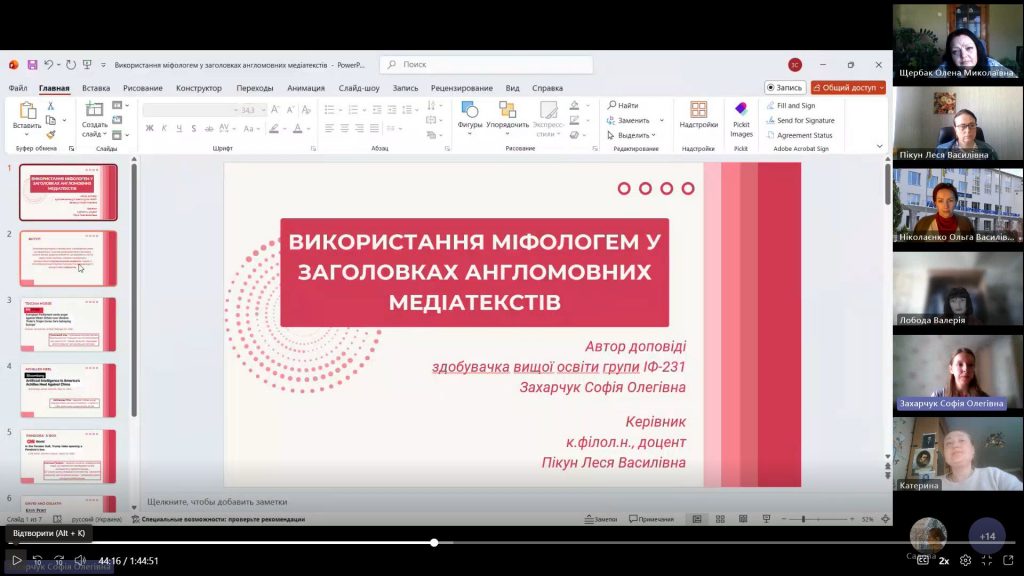
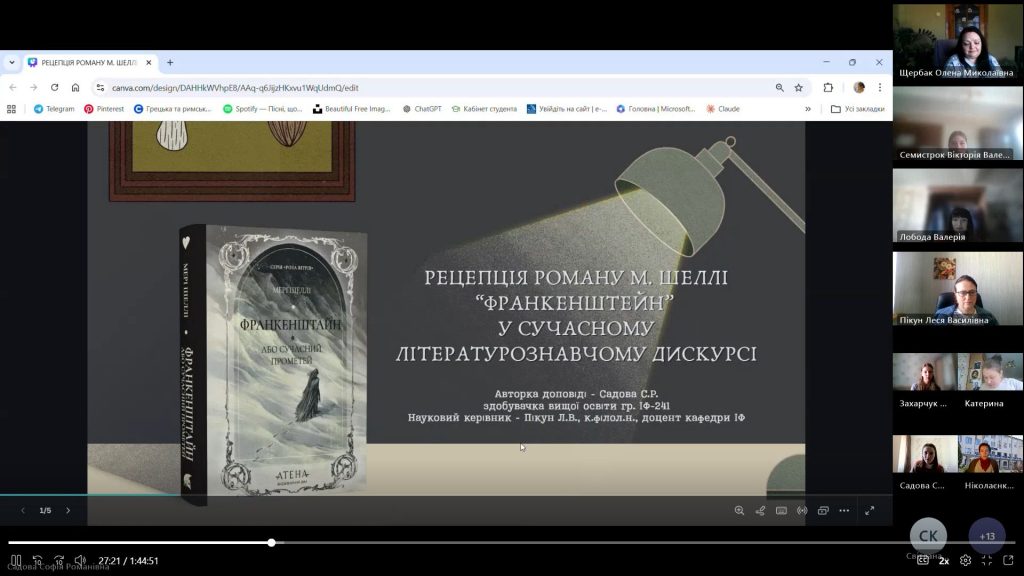
Fundamental language phenomena: Language and speech (M.V. Ivanova) and universals in the sound system (A.S. Hrytsenko). Modern discourse practices: From gaming slang (M.O. Kolosha) to political hedging (D.E. Bura) and the use of mythologems in the media (S.O. Zakharchuk). Artistic imagery: Significant attention was paid to symbolism and psychology in world classics and postmodern works (V.V. Semystrok, S.A. Kurdanova, S.R. Sadova, K.V. Los, A.A. Lozytska).
Both sessions were successful and productive. The high level of preparation and the active interaction between speakers and guests confirmed that “Youth of Science” remains a vital stage in the professional and academic development of future experts and scholars.