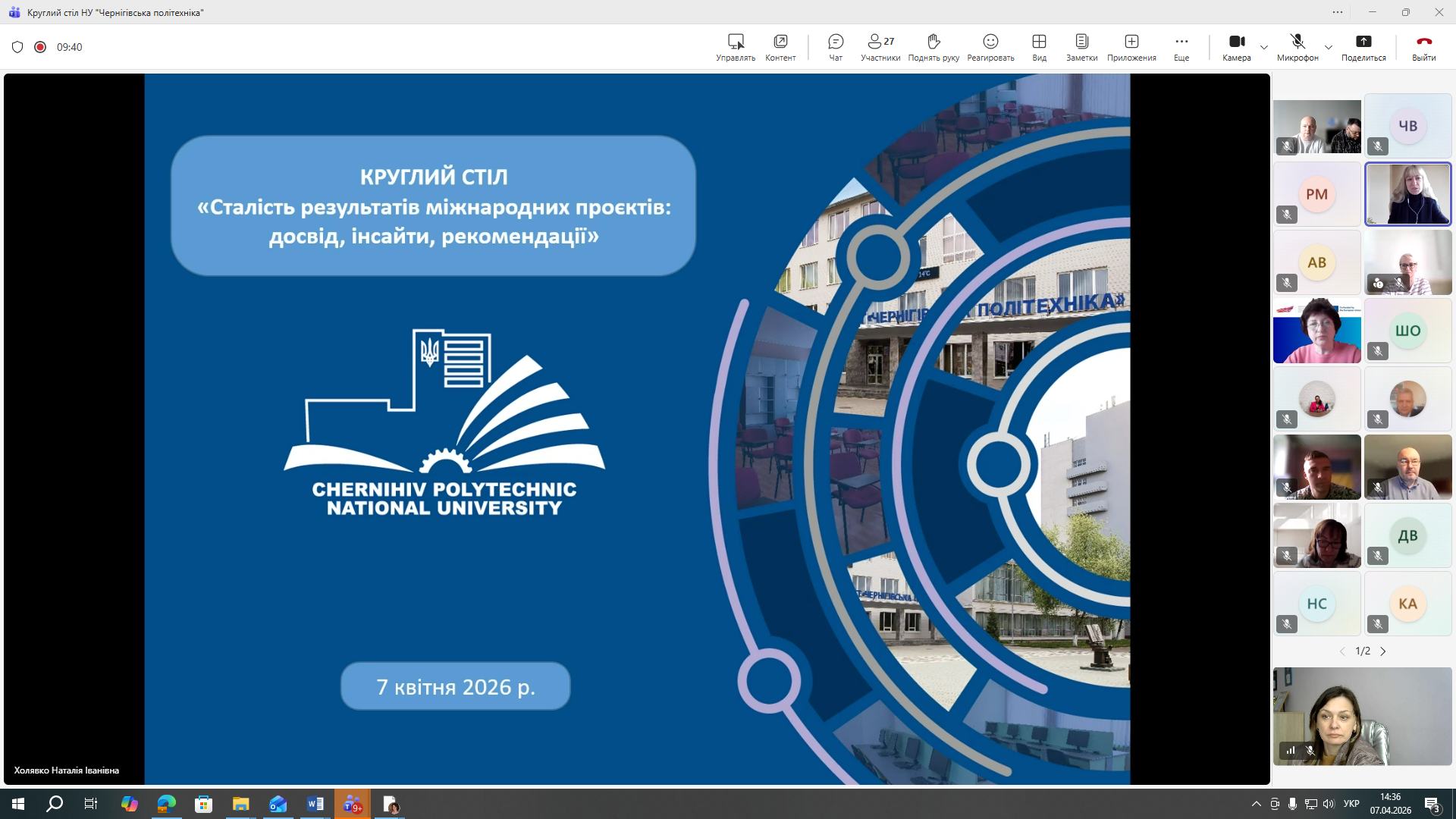
Round Table: “Sustainability of International Project Outcomes: Experience, Insights, Recommendations”
On 7 April 2026, a round table entitled “Sustainability of International Project Outcomes: experience, insights, recommendations”, which brought together academic and teaching staff, international project coordinators, researchers and representatives of project teams interested in improving the effectiveness of grant initiatives and ensuring the long-term impact of their results.
The event aimed to summarise practical experience in implementing international projects, particularly the Erasmus+ and Horizon Europe programmes, as well as to develop a shared vision of approaches to ensuring the sustainability of their results after funding has ended. Particular attention was paid to the practical aspects of project management that are of direct relevance to teams at various stages of preparing and implementing grant initiatives.
The Vice-Rector for Research, Candidate of Technical Sciences and Associate Professor Anatolii Prystupa addressed the participants with a welcoming speech, emphasising the importance of a systematic approach to the implementation of international projects, as well as the need to ensure their long-term impact on the development of the university, the educational process and scientific research.
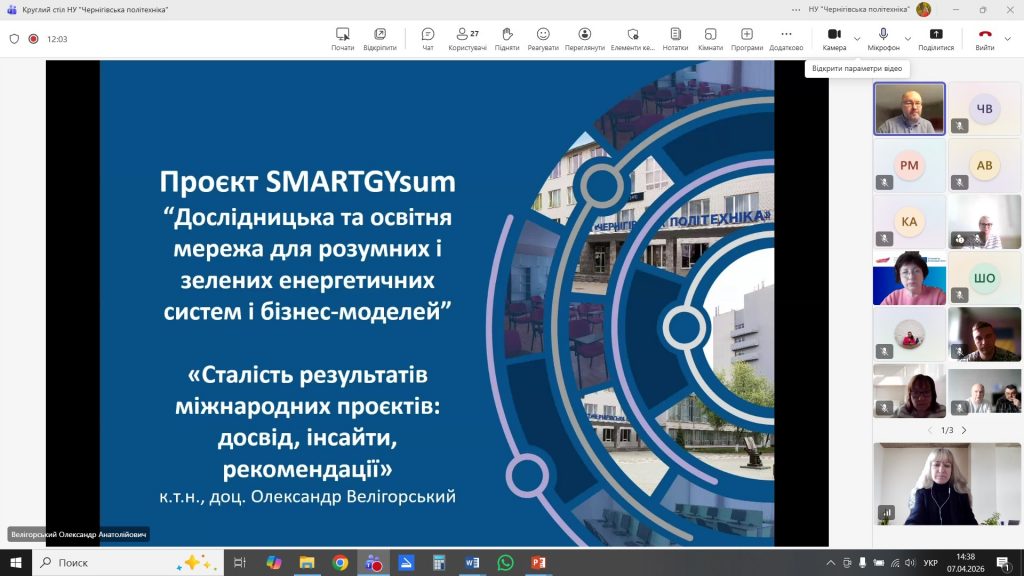
During the main part of the round table, the experience of implementing several international projects was presented. In particular, Oleksandr Velihorskyi presentation highlighted the specifics of implementing Horizon Europe projects, using SMARTGYsum (https://stu.cn.ua/mizhnarodna-diyalnist/mizhnarodni-programy-ta-proekty/proyekt-smartgysum/) as an example. The speaker emphasised the complexity of coordinating multilateral partnerships, the importance of clear planning of research and educational components, and the need to integrate project results into the university’s internal processes.
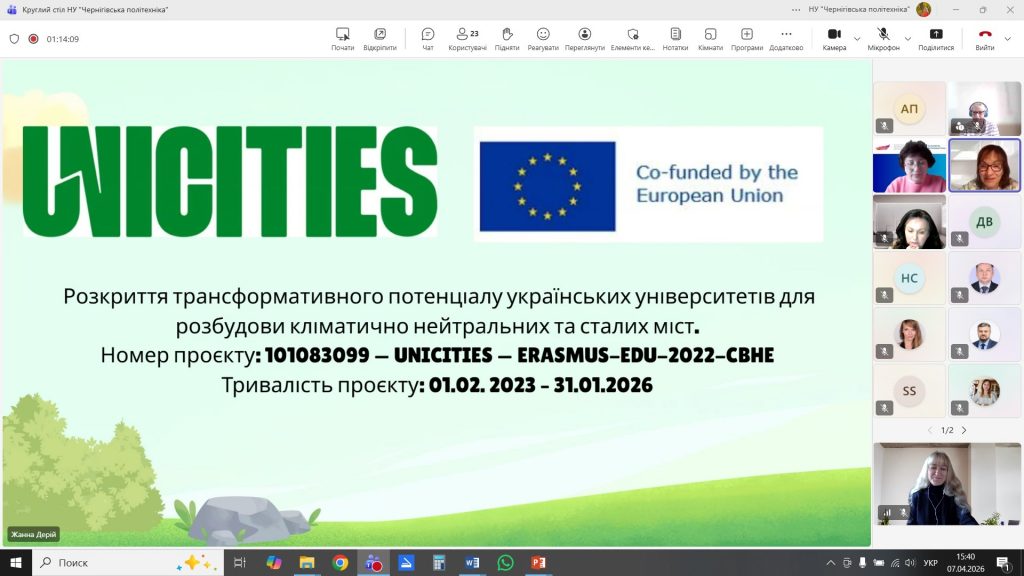
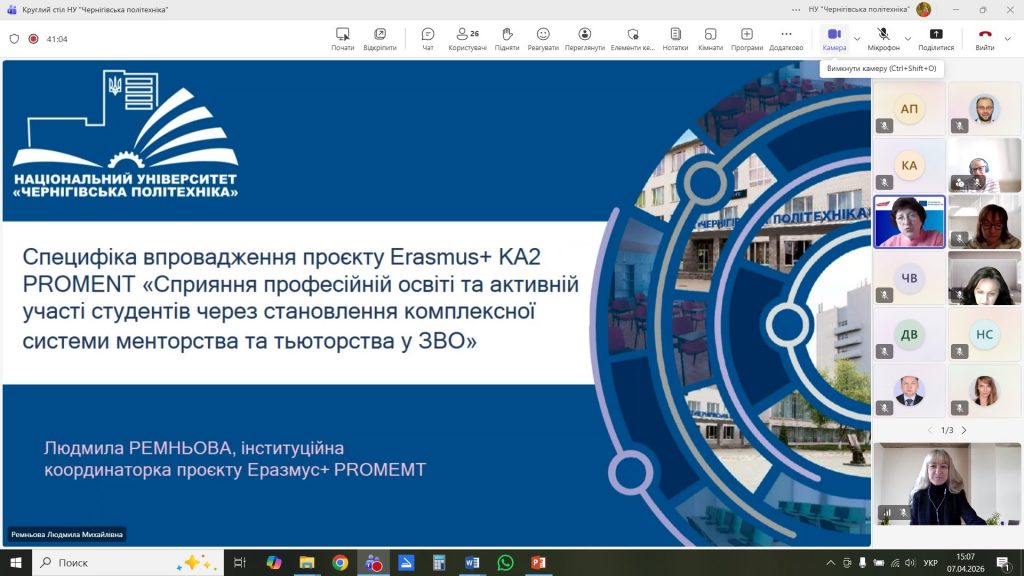
Lyudmila Remnova presented the specifics of implementing the Erasmus+ KA2 PROMENT project (https://stu.cn.ua/mizhnarodna-diyalnist/mizhnarodni-programy-ta-proekty/proment/), focusing on the development of a mentoring and tutoring system in higher education institutions. The presentation covered the practical aspects of organising the team’s work, interacting with partners, and adapting international experience to the national educational environment. The experience of implementing the Erasmus+ KA2 UNICITIES project (https://stu.cn.ua/mizhnarodna-diyalnist/mizhnarodni-programy-ta-proekty/proekt-unicities/) was presented by Zhanna Derii. The presentation highlighted the role of universities in shaping climate-neutral and sustainable cities, as well as outlining the challenges associated with cross-sectoral cooperation and approaches to overcoming them.
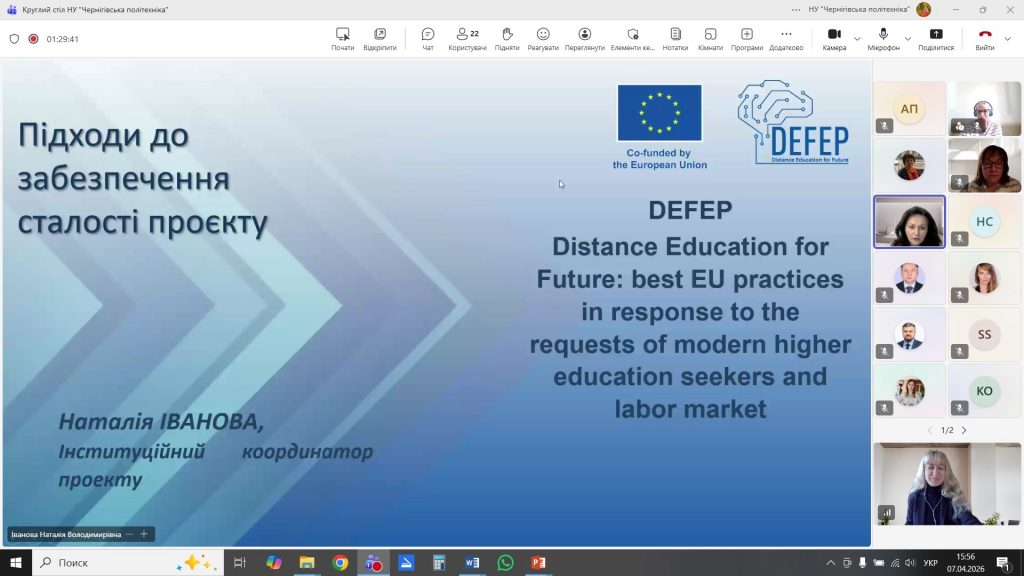
In her speech, Nataliia Ivanova focused on approaches to ensuring the sustainability of the results of the Erasmus+ KA2 DEFEP project (https://stu.cn.ua/mizhnarodna-diyalnist/mizhnarodni-programy-ta-proekty/proyekt-defep/). The importance of further developing the educational courses created, the effective use of material and technical resources, and the integration of the project’s results into the university’s educational and research activities was emphasised.
The speakers’ presentations covered issues such as organising teamwork, effective interaction with international partners, overcoming challenges during project implementation under martial law in Ukraine, and formulating practical recommendations for coordinators and teams of new initiatives. Significant emphasis was placed on ensuring the sustainability of results through the institutionalisation of best practices, their scaling up, and further use in the teaching process and research activities.
In summarising the round table, the high level of interest among participants and the practical significance of the materials presented were noted. The event confirmed the value of regular exchange of experience between international project coordinators as an important tool for improving the quality of project activities and ensuring the sustainable development of the university environment.