A series of training sessions for teachers entitled “The ABCs of sustainable development and how to develop competencies in sustainable management?” as part of the ERASMUS+ SUSTED project
As part of the Erasmus+ KA2 SUSTED project “Education for Sustainable Development: Synergy of Competences for the Recovery of Ukraine”, a series of training sessions for academic and teaching staff on the topic “The ABC of SD & how to develop sustainable management competencies?” was held from 13 to 17 April 2026. The event took place in a hybrid format and brought together representatives from various higher education institutions with the aim of strengthening their capacity to integrate the Sustainable Development Goals (SDGs) into the educational process, institutional policy and management practices.
The training programme was structured as a logically sequential process – from building a basic understanding of the concept of sustainable development to developing specific tools and strategic solutions for universities.
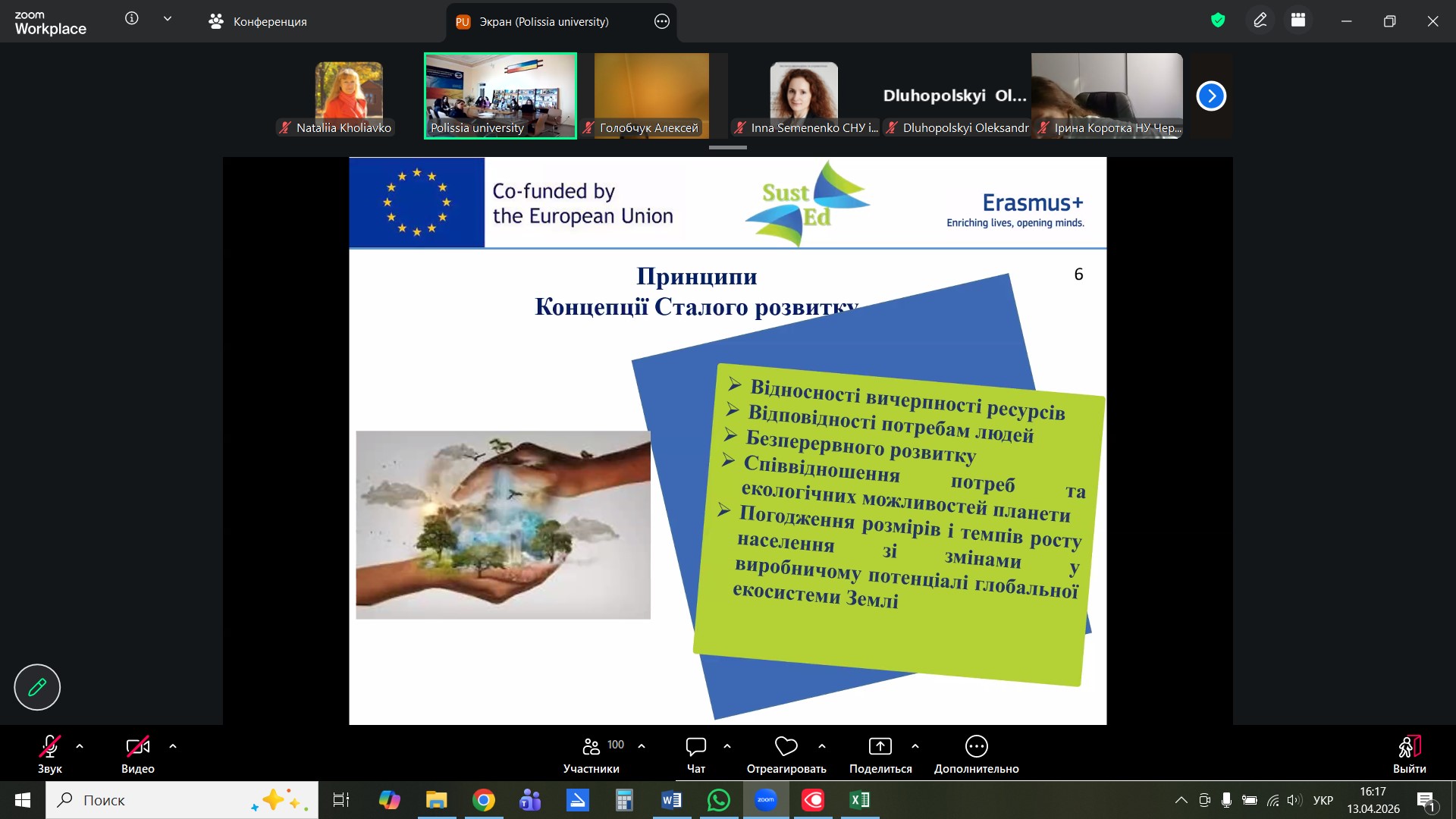
On the first day, 13 April, the training was delivered by a team from Polissia National University, who presented the evolution of approaches from the Millennium Development Goals to the current Sustainable Development Goals. Participants had the opportunity to gain a deeper understanding of the essence of the SDGs and their significance for the transformation of higher education, and also completed a practical exercise mapping the SDGs at the level of their own universities.
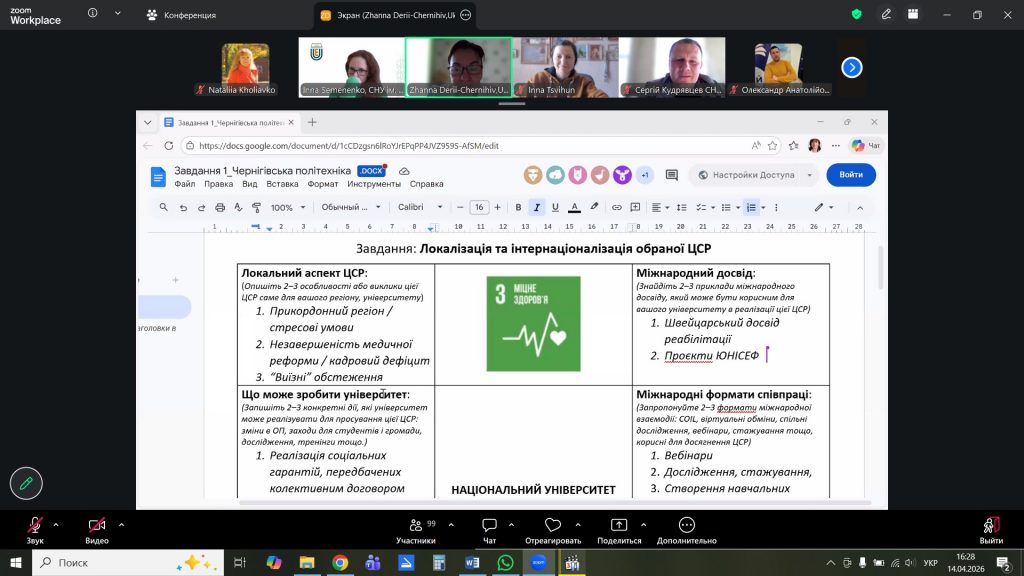
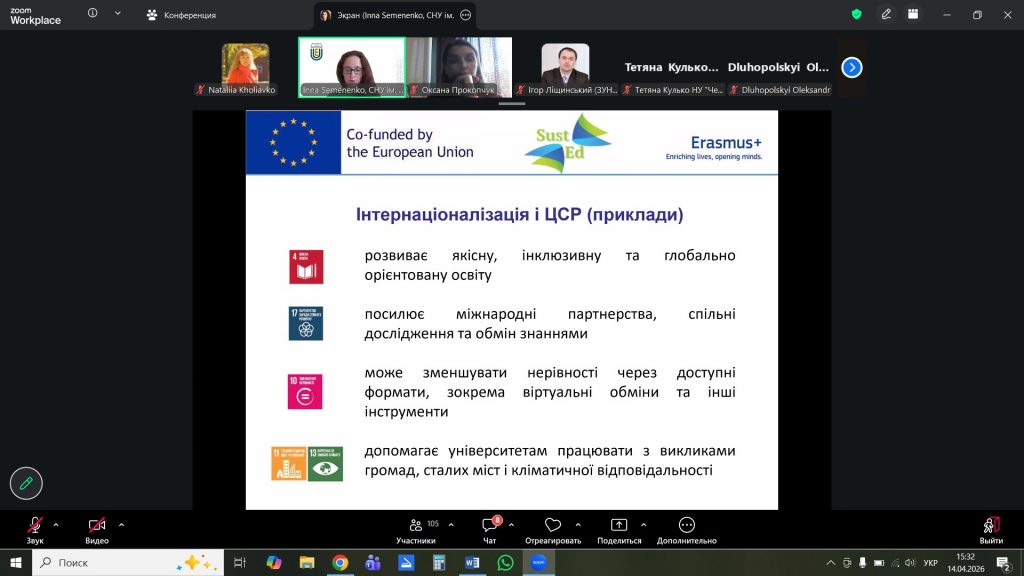
The following day, 14 April, the initiative was taken over by the Volodymyr Dahl East Ukrainian National University, which focused on issues of internationalisation and engagement with stakeholders. Participants explored approaches to identifying internal and external stakeholders, analysed their role in implementing sustainable development principles, and developed stakeholder maps as a tool for effective communication and collaboration.
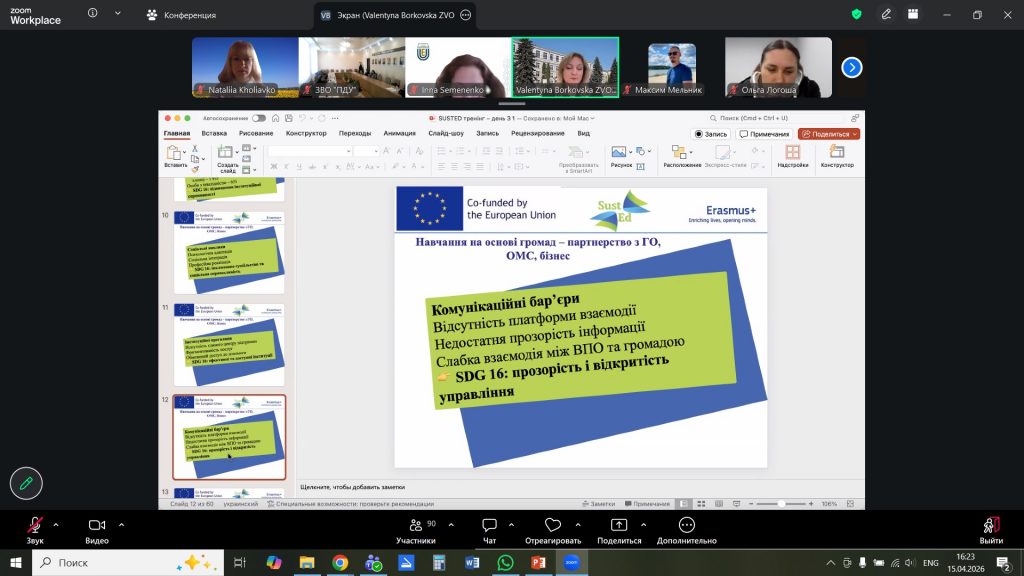
The third day, 15 April, was devoted to pedagogical aspects and was coordinated by Podillia State University. The main focus was on modern teaching methods and approaches to education for sustainable development. Participants worked on creating lesson plans, integrating ESD principles, and familiarised themselves with innovative educational methods that help develop relevant competencies in students.
The fourth day, 16 April, organised by the West Ukrainian National University, built on previous work, focusing on measuring the results achieved. Participants learnt about tools for developing key performance indicators (KPIs), monitoring and evaluation systems, as well as approaches to preparing reports on progress in implementing the Sustainable Development Goals at the institutional level.
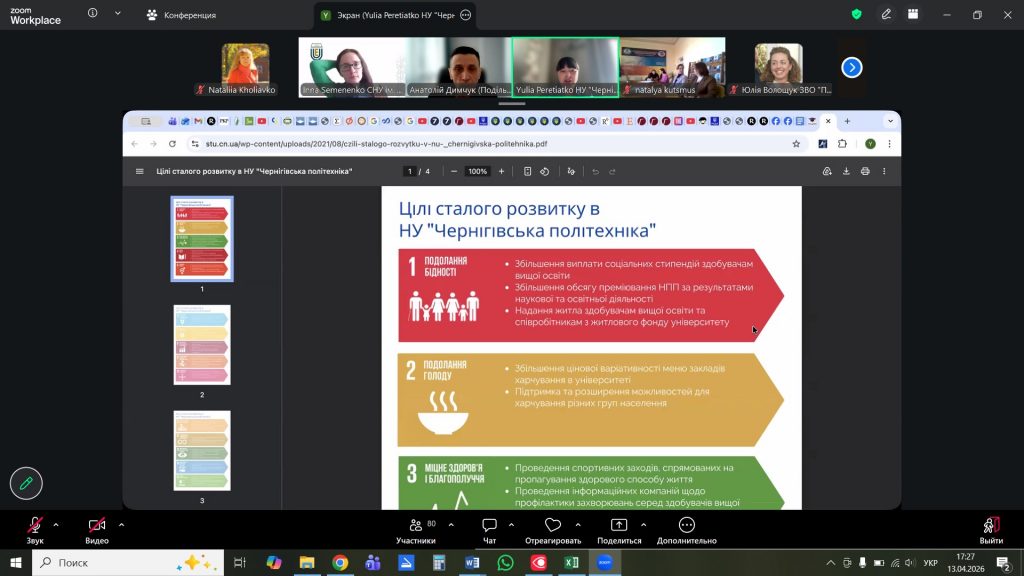
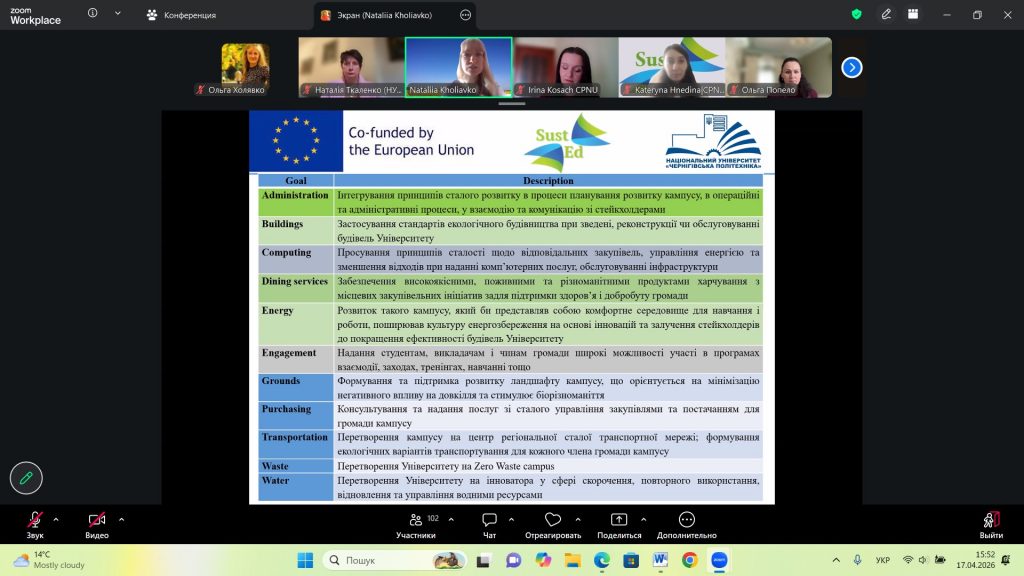
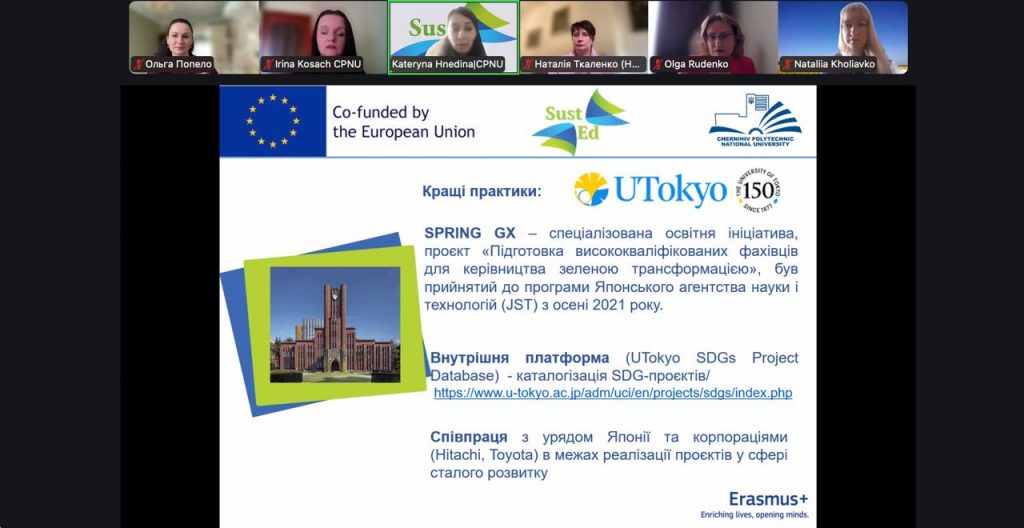
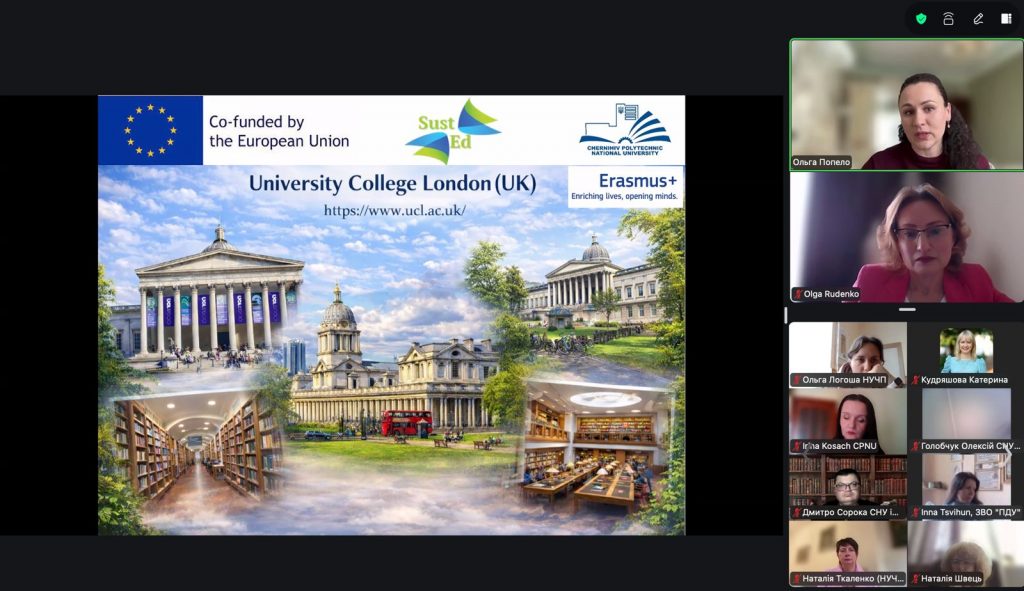
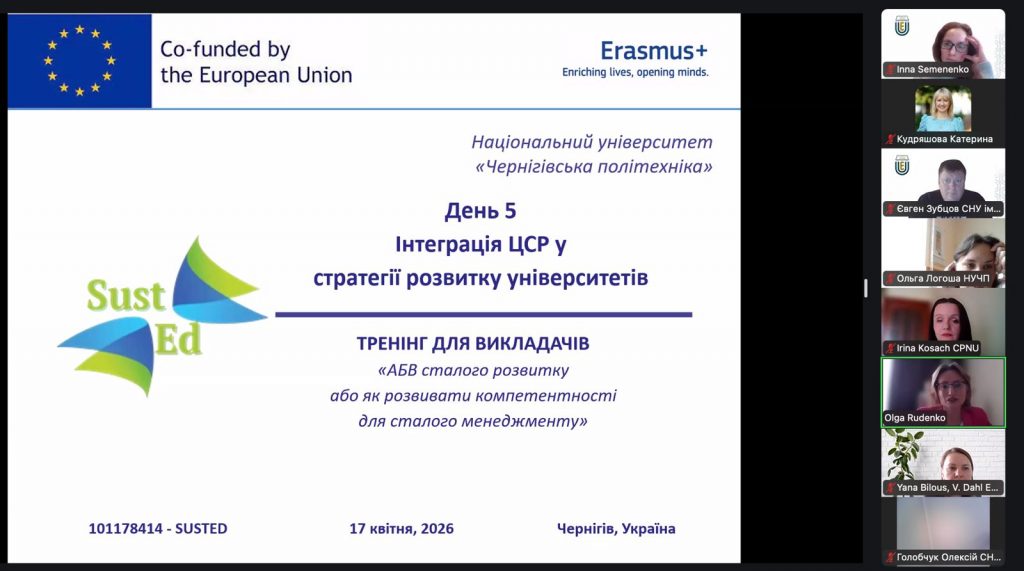
The final, fifth day of the training, on 17 April, was organised by the team from Chernihiv Polytechnic National University and served as the concluding stage of the entire programme. It was on this day that the transition took place from individual tools and approaches to their holistic integration into university development strategies. The topic of incorporating the Sustainable Development Goals into institutional strategies was explored through a combination of theoretical approaches and practical experience. Trainers from Chernihiv Polytechnic National University (O.M. Rudenko, V. Margasova, N. Tkalenko, K. Hnedinka, O. Popelo, I. Kosach, K. Kudriashova, N. Kholiavko) presented in detail approaches to aligning the university’s strategic documents with the principles of sustainable development, emphasising the importance of a systematic approach, cross-sectoral cooperation and consistency in management decisions. Particular emphasis was placed on the practical aspects of implementing changes – from the formulation of internal policies to the integration of the SDGs into educational programmes, research activities and management processes (based on the experience and best practices of leading universities in the EU, the USA, Canada, Japan and Australia). As part of the practical session, training participants developed annual action plans for their higher education institutions.
SUSTED project coordinator Nataliia Kutsmus (Polissia National University) summarised the results of the five-day training sessions, outlining key conclusions and identifying further steps for cooperation. The importance of developing professional communities, creating networks of interaction between universities and launching joint initiatives was emphasised.
The series of training sessions demonstrated a high level of interest among universities in implementing the principles of sustainable development and marked an important step towards the systemic transformation of higher education, geared towards contemporary global challenges and the needs of society.
The project is co-funded by the European Union; however, the views and opinions expressed belong solely to the authors of this project and do not necessarily reflect the views of the European Union or the European Education and Culture Executive Agency. Neither the European Union nor the grant provider can be held responsible for them.